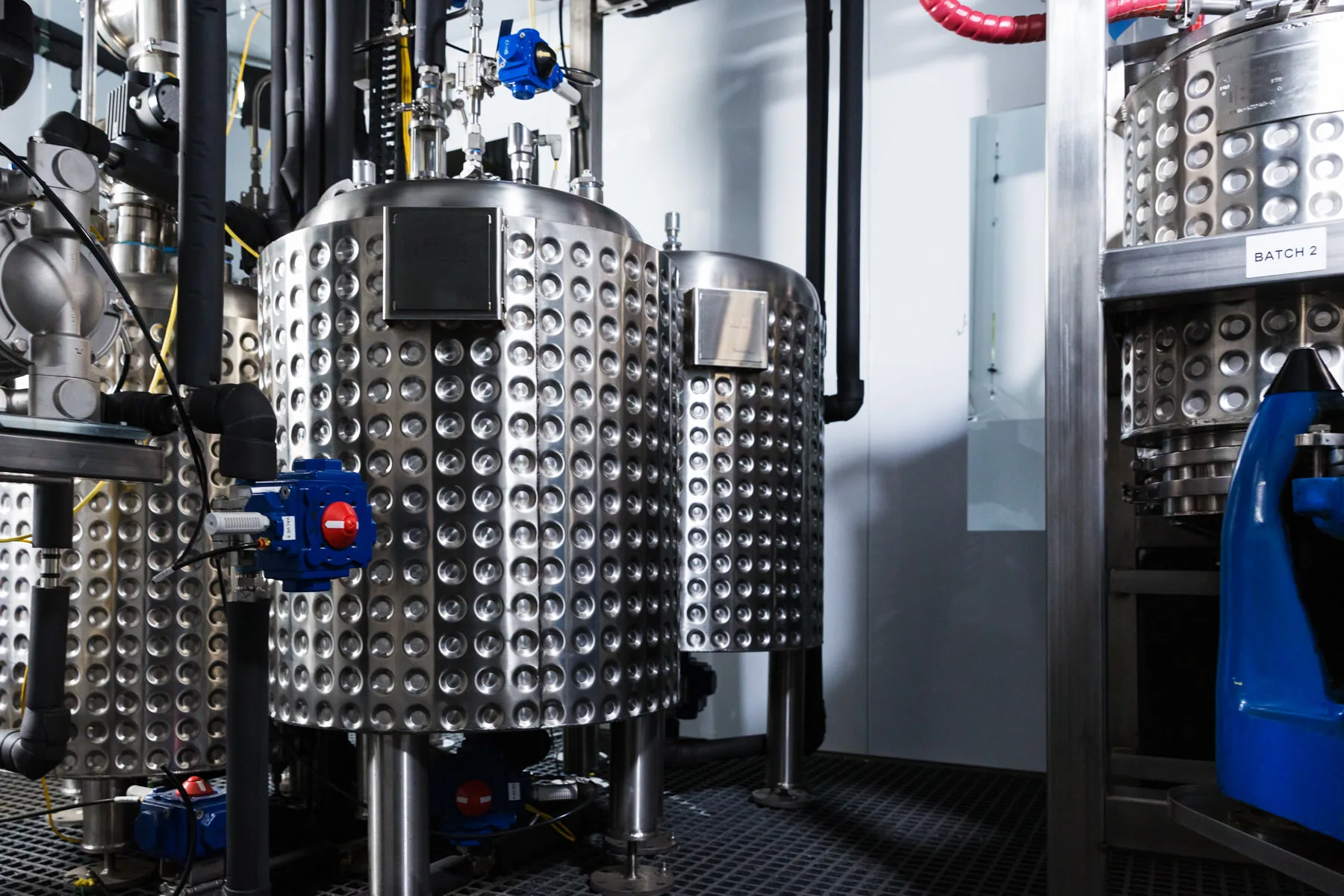
Custom Pressure Vessels, Tanks & Reactors Built Around Your Process
MRX designs and builds custom pressure vessels, tanks, and reactors for food, pharma, beverage, biopharma, and other demanding process industries. From application engineering and component sourcing to fabrication, automation, delivery, and system integration — we build around your process, your product, and your operating requirements.
Engineering-Led Approach
Engineered for the Process, Not Built from a Generic Template
The right vessel is not just a container. In many applications, it is the center of the process.
That is why MRX approaches pressure vessels, tanks, and reactors as engineered process assets rather than commodity hardware. We design around what the system actually needs to do: hold pressure, manage temperature, support mixing, enable cleaning, integrate controls, protect product quality, and fit the real operating environment.
For hygienic and regulated applications, that approach matters even more. FDA cGMP rules require equipment to be appropriately designed for its intended use and for cleaning and maintenance, and require product-contact surfaces not to be reactive, additive, or absorptive in ways that could affect product quality. For bioprocessing and pharmaceutical applications, ASME BPE covers materials, design, fabrication, inspection, testing, and certification considerations.
500+
Systems Installed
11+
Years in Service
9
Industries Served
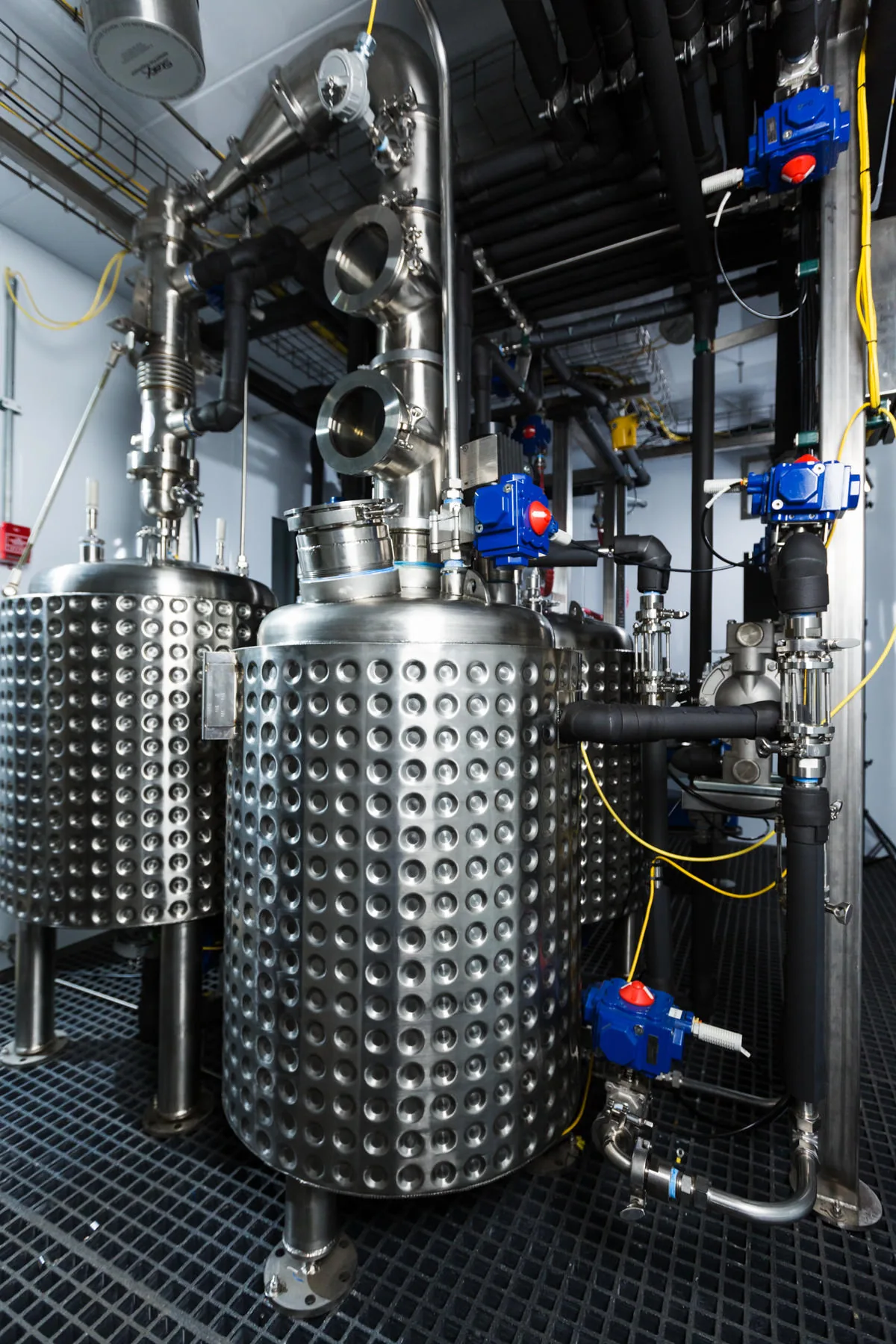
Jacketed Reactor Systems — Canby, Oregon
ASME BPVC 2026 · Dimple-plate jackets · Actuated valve controls
What MRX Builds
Pressure Vessels, Tanks & Reactors for Demanding Industries
We support projects from a straightforward process tank to a fully integrated, automated reactor system built around heating, cooling, agitation, dosing, controls, and cleaning strategy.
Pressure Vessels
Custom-engineered pressure vessels built around containment, process conditions, and real operating requirements. Designed for applications where internal pressure, thermal duty, or code-driven engineering requirements are central to the job.
Process Tanks
Tanks designed for storage, blending, buffering, transfer, and other process-critical duties. Built with the surface finish, geometry, and port placement the process actually requires — not a standard off-the-shelf package.
Custom Reactors
Reactor systems developed around mixing, temperature control, dwell time, automation, and product-specific process goals. The reactor is built for the process taking place inside it — not just sized for volume.
Understanding the Equipment
Pressure Vessels vs. Tanks vs. Reactors
Not every process vessel serves the same purpose. The right answer depends on the process — which is why vessel design should begin with the application, not with a generic catalog selection.
Pressure Vessels
Designed for applications where internal pressure, thermal duty, containment, or code-driven engineering requirements are central. ASME's BPVC remains the foundational technical reference for design, manufacturing, construction, and operation.
Process Tanks
Often built around storage, blending, buffering, transfer, or batch handling requirements. Geometry, port placement, surface finish, and cleanability define performance — not just volume.
Reactors
Built for process work inside the vessel itself. Variables such as temperature control, agitation, dwell time, mass transfer, addition sequencing, or phase behavior directly affect the product outcome. The reactor must be designed around the chemistry.
Key Takeaways
- Vessel design should begin with the application, not a catalog size
- ASME BPVC 2026 is the foundational standard for pressure-containing equipment design
- ASME BPE applies specifically to bioprocessing and high-hygiene applications
- Cleanability and CIP strategy are part of whether the system is fit for purpose
- Automation can turn a vessel into a complete, repeatable process system
Oregon Engineered · Built to Code
Every MRX vessel and reactor is designed and fabricated at our Canby, Oregon facility under ASME BPVC 2026 standards — with ASME BPE capability for pharmaceutical and bioprocessing applications that demand it.
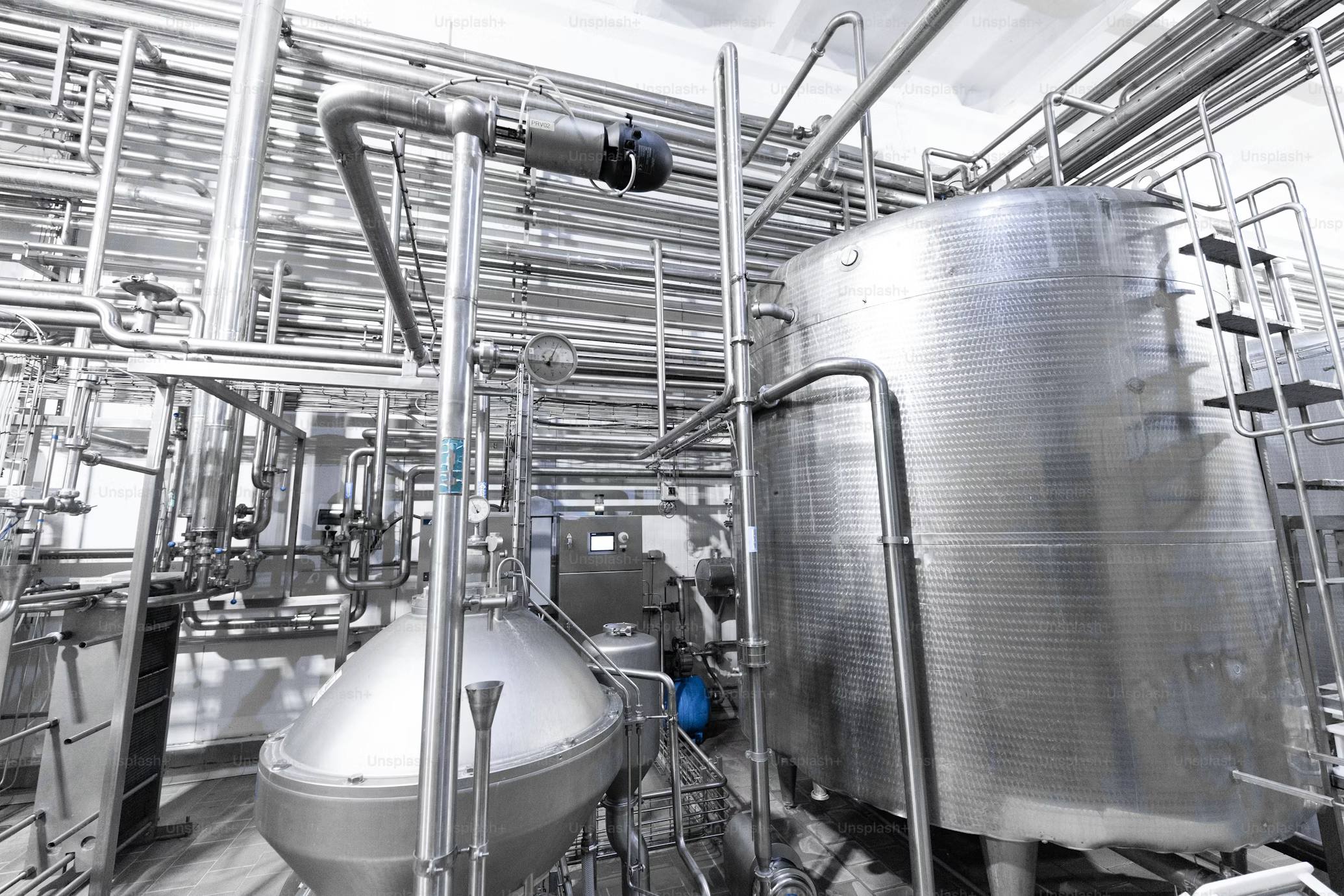
CIP-Ready Design
Spray coverage · Drainability · Hygienic geometry
Hygienic Design
CIP-Ready Vessel Design for Cleanable Process Systems
In food, beverage, pharma, biopharma, and other hygiene-sensitive industries, cleanability is not a side feature. It is part of whether the system is fit for purpose.
3-A describes Clean-in-Place (CIP) as removal of soil from product-contact surfaces in their process position by circulating, spraying, or flowing cleaning solutions and water rinses. FDA cleaning guidance emphasizes that cleaning practices should prevent conditions that allow microbial proliferation. At MRX, CIP-ready design means thinking through cleanability from the beginning.
Automation Available
Automation When the Process Demands It
Some vessel projects need more than stainless steel and fabrication. They need controlled process execution.
ISA defines automation as the creation and application of technology to monitor and control the production and delivery of products and services. MRX can develop vessels and reactor systems with automation where required for consistency, repeatability, monitoring, and operator control. That means the vessel can become a more complete process system rather than just a fabricated asset.
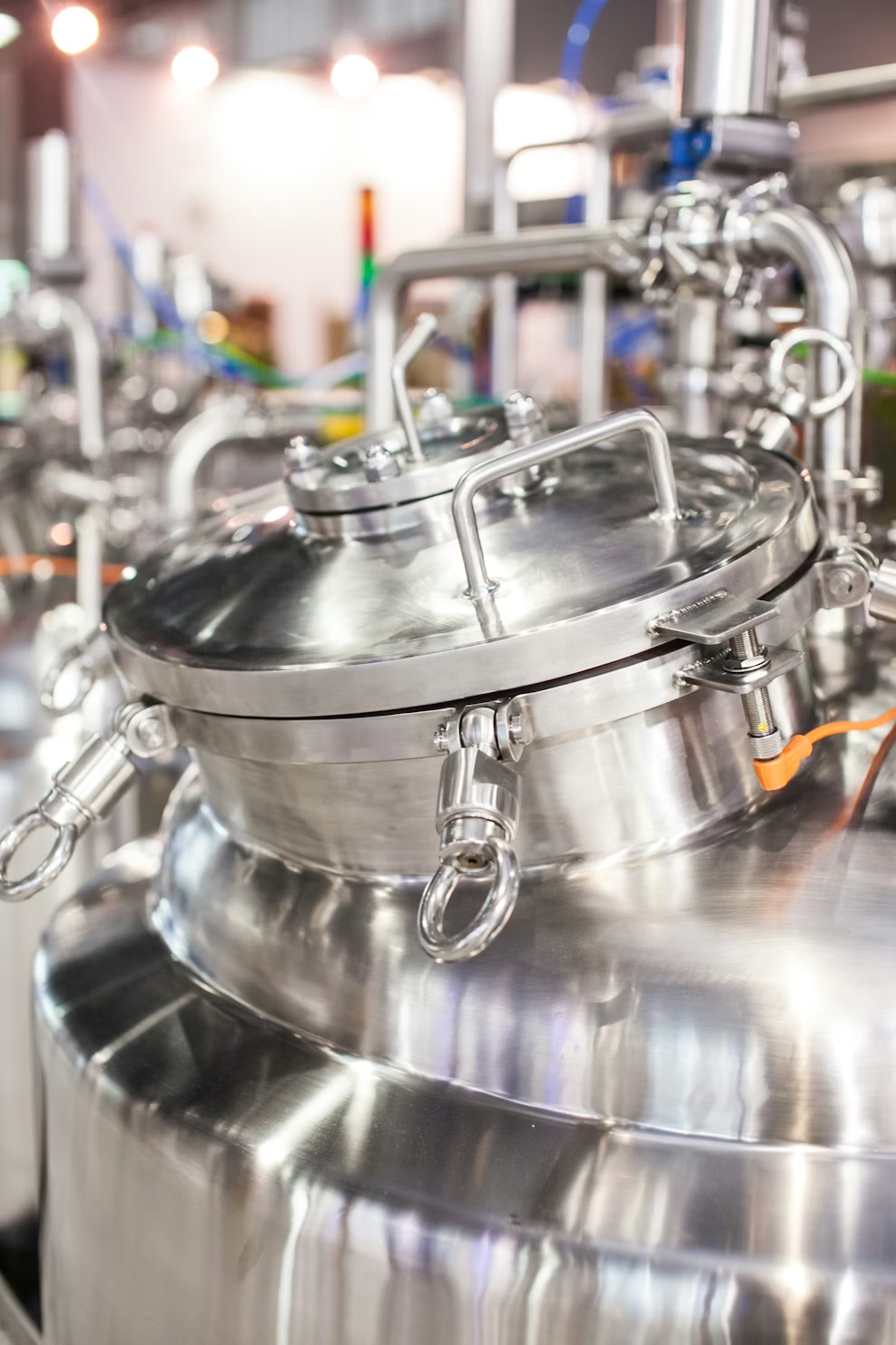
UL-Listed Intrinsically Safe Controls
Process automation · Recipe control · Operator interface
Industries Served
Built for Food, Beverage, Pharma, Biopharma & More
Food & Beverage
Vessels and reactors for food and beverage systems must support cleanability, material integrity, sanitation, repeatability, and practical maintenance. 3-A's sanitary framework and FDA food-safety guidance both reinforce the importance of cleanable, sanitation-ready equipment design.
Pharma & Biopharma
For pharmaceutical and biopharma applications, equipment design must support intended use, cleaning, maintenance, and non-reactive product-contact surfaces under cGMP expectations. ASME BPE is specifically aimed at bioprocessing and high-hygiene applications, covering materials, design, fabrication, inspections, testing, and certification.
Cannabinoids & Specialty Processing
For cannabinoids and specialty process applications, performance depends on the right combination of vessel geometry, thermal control, agitation, cleaning strategy, instrumentation, and operator control. A reactor has to be designed around the chemistry and the production workflow, not just around volume.
Other Process Industries
MRX also supports custom vessel and reactor development for industrial processes where containment, process control, thermal management, mixing, sanitation, or integration are central to the application. If the process has specific performance demands, we engineer around them.
Engineering Scope
Built Around Your Product, Process & Facility
No two vessel projects are exactly alike. That is why MRX designs around real process conditions rather than forcing the process into a standard package.
Operating Pressure & Temperature
Product Behavior & Fluid Characteristics
Heating & Cooling Requirements
Agitation & Mixing Strategy
Batch or Continuous Workflow
CIP Requirements & Drainability
Instrumentation & Controls
Automation & Sequencing
Facility Footprint & Utility Conditions
Integration into Broader Systems or Skids
This is where custom engineering matters most. The right reactor or vessel is not simply sized correctly. It is designed to perform correctly inside the process.
Delivery Model
From Engineering to Delivery
A strong vessel supplier does more than fabricate stainless. The value is in carrying the project from concept through execution with the right level of engineering, sourcing, fabrication, and system thinking.
Step 01
Application Engineering
We begin by defining the vessel or reactor around what the system actually needs to do — hold pressure, manage temperature, support mixing, enable cleaning, and integrate controls. Engineering is where performance is determined before fabrication begins.
Step 02
Vessel & Reactor Design
We develop the design around operating pressure and temperature, product behavior, heating and cooling requirements, agitation strategy, CIP needs, and facility footprint. The right vessel is not simply sized correctly — it is designed to perform inside the process.
Step 03
Component & Instrumentation Sourcing
We source the right materials, fittings, instrumentation, agitators, jackets, and supporting hardware based on the application, fluid compatibility, hygienic requirements, and system design.
Step 04
Automation Integration
When the process demands it, we integrate automation for temperature control, agitation logic, filling and dosing, level and pressure monitoring, recipe-style sequencing, alarms, interlocks, and operator interface.
Step 05
Fabrication & Assembly
All fabrication takes place at our Canby, Oregon facility. Stainless, carbon steel, and exotic alloys are processed in-house — with no outsourcing for structural welds, surface finishing, or assembly.
Step 06
Testing, Delivery & Deployment
We coordinate testing, factory acceptance, and delivery planning to match the project timeline and site requirements — with the documentation and support needed for smooth startup and commissioning.
Specification Guidance
What to Evaluate When Specifying a Vessel or Reactor
Buyers often focus first on capacity. In practice, project success depends on more than volume alone — especially in regulated and hygiene-sensitive environments.
Especially critical in regulated environments — where equipment design, cleanability, and maintenance are explicitly linked to product safety and quality under FDA rules.
Why Teams Choose MRX
A Partner That Can Understand the Application and Build Around the Process
Customers looking for a vessel or reactor supplier are usually solving a process problem, not just buying a metal package. They need a partner that can understand the application, design around the process, build for the environment, integrate the right components, and deliver a system that works in the real world.
- Custom-engineered around the application — not built from a generic template
- Built for demanding process environments across food, beverage, pharma, biopharma, and specialty processing
- CIP-ready design options for hygiene-sensitive systems
- Automation available when process control, repeatability, and monitoring matter
- Full engineering support from application concept through delivery and commissioning
- Fabricated in Canby, Oregon — 100% in-house with no outsourced structural work
- ASME BPVC 2026 standards; ASME BPE-capable for high-hygiene bioprocessing
ASME BPVC 2026
Pressure Vessel Standard
ASME BPE
Bioprocessing Equipment Standard
3-A Sanitary
Food & Pharma Hygienic Design
Canby, OR
100% In-House USA Fabrication
UL-Listed
Intrinsically Safe Controls
Frequently Asked Questions
Common Questions About MRX Vessels & Reactors
Have your process conditions ready? Get a vessel quote from our engineering team.
Bring your operating pressure, temperature, volume, materials, and any code or documentation requirements. We'll build from there.
Pressure Vessels · Piping · Nuclear-Adjacent BOP
Technical Resources in This Cluster
Buyer's Guide
Pressure Vessel, Tank & Reactor Buyer's Guide
Code Guide
2026 ASME BPVC Key Changes for Pressure Vessels
Best Practices
Process Piping Fabrication: Regulated Industries
Technical Guide
Nuclear-Adjacent Balance-of-Plant Fabrication
RFQ Guide
Nuclear & Advanced Reactor Pressure Vessel RFQ Guide
Comparison Guide
ASME Section III vs. Section VIII — Procurement Guide
Comparison Guide
Pressure Vessel vs. Tank vs. Reactor — How to Specify the Right System
Need a Custom Vessel, Tank or Reactor for Your Process?
Talk with MRX about your application, product requirements, hygienic expectations, automation needs, and process goals. We can help define the right vessel or reactor approach from engineering through fabrication and final delivery.