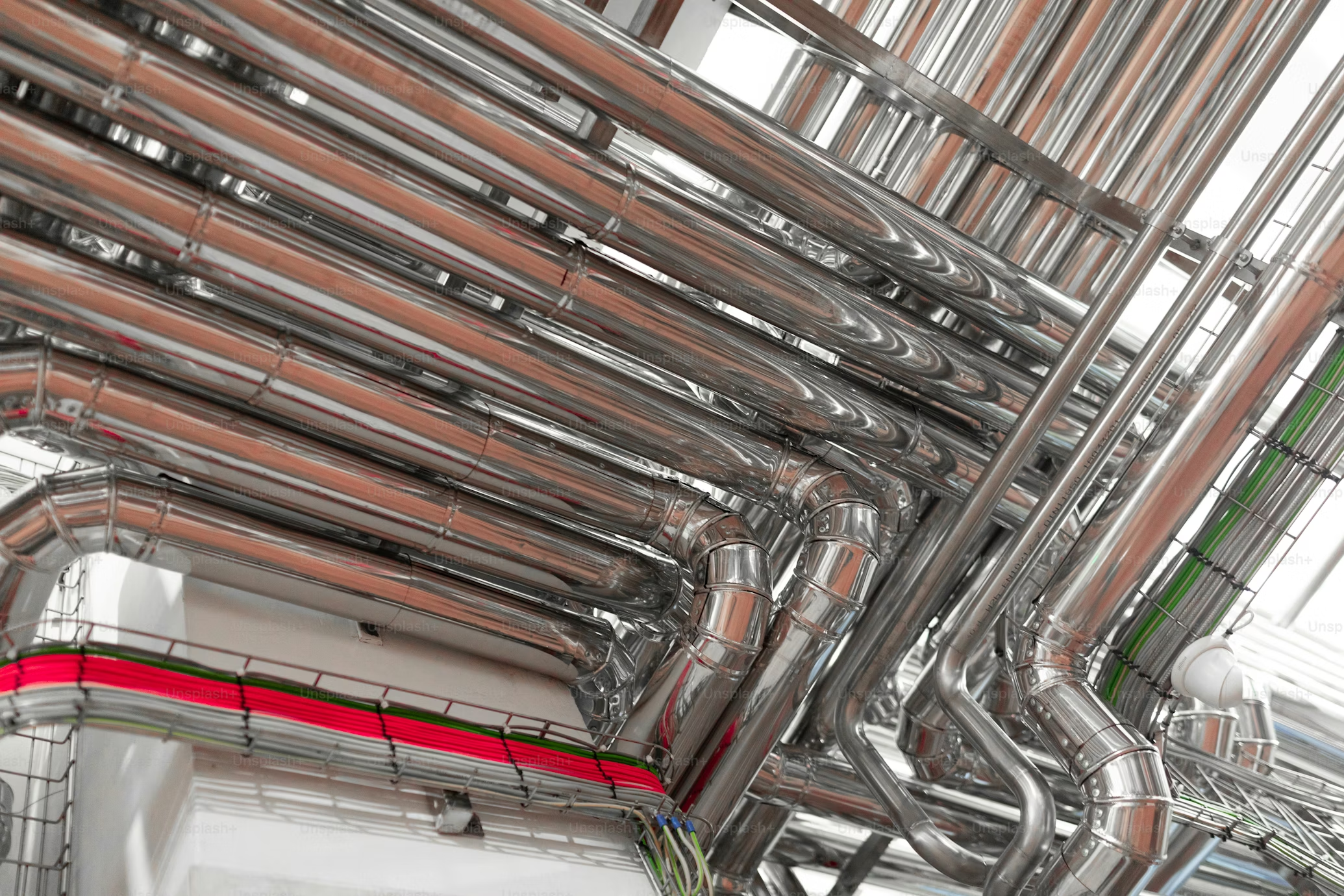
Nuclear-Adjacent
Balance-of-Plant Fabrication
Pressure Vessels, Heat Exchangers, Tankage, Modules & Non-Class Piping
MRX supports nuclear and advanced-energy projects with ASME Section VIII pressure vessels, custom heat exchangers, skid modules, tankage, non-Class piping, decommissioning containers, and hot cell ancillary fabrication — entirely in-house in Canby, Oregon.
Why This Matters
The vessels, exchangers, tanks, and modules that support a nuclear or advanced-energy plant are high-stakes fabrication even when they are not nuclear-class components.
Nuclear and advanced-energy projects generate a substantial scope of fabrication needs that are not governed by ASME Section III nuclear-class requirements but still demand fabrication quality, documentation discipline, and engineering rigor well above ordinary commercial standards. This is the balance-of-plant (BOP) space — secondary-side process equipment, support-system heat exchangers, plant service tankage, chemical addition and sampling modules, non-Class piping, and the decommissioning and hot-cell fabrication that surrounds the nuclear core.
Plant owners, EPC contractors, and engineering firms sourcing this work need fabricators who understand the expectations of the environment — the documentation and traceability requirements, the code discipline, the inspection rigor, and the consequence of quality failures in an operating nuclear or energy facility — without necessarily requiring Section III certification on every component.
MRX is a custom fabricator positioned exactly in this space. ASME Section VIII U and UM stamp authority, in-house engineering depth, complete documentation discipline, and full-scope fabrication capability — built for the kind of technically demanding, quality-sensitive work that balance-of-plant and nuclear-adjacent projects require.
Key Takeaway
Balance-of-plant fabrication is not a lower-tier scope — it is a demanding technical discipline where fabrication quality, engineering depth, and documentation rigor all carry real project and operational consequences. The right fabricator understands this, and designs and builds accordingly.
Section VIII Pressure Vessels
ASME Section VIII Division 1 & 2 Vessels for Secondary-Side and Balance-of-Plant Service
The secondary side of a nuclear plant and its supporting systems include a wide range of ASME-coded pressure vessels that fall outside nuclear-class requirements. Feedwater heaters, deaerators, condensate tanks, boric acid storage tanks, flash tanks, and surge vessels are all conventional industrial-code components that must still be engineered, fabricated, inspected, and documented to a quality standard appropriate for their operating environment.
MRX fabricates these vessels under ASME Section VIII Division 1 and Division 2 authority, with in-house engineering to address the full design basis — material selection, thermal and pressure design, nozzle and connection geometry, support and attachment design, NDE, hydrostatic testing, and as-built documentation packages.
See also: MRX Pressure Vessels, Tanks & Reactors and the Pressure Vessel Buyer's Guide.
Vessel Types
Secondary-Side & Support Vessel Scope
MRX engineers and fabricates Section VIII vessels from specification to delivery — including material procurement with full traceability, weld qualification, NDE, PWHT where applicable, hydrostatic testing, and organized documentation packages. See how the 2026 ASME BPVC changes affect pressure vessel specifications.
Heat Exchangers
Custom Heat Exchangers for Nuclear Plant Support Systems
Service water, component cooling, chilled water, and lube-oil systems all require heat exchangers engineered to the actual operating duty — not adapted from the nearest standard catalog item.
Service water heat exchangers
Closed-cycle cooling for plant support systems
Component cooling water (CCW) exchangers
Secondary heat removal loops for process equipment
Chilled water heat exchangers
HVAC and environmental control system support
Lube-oil coolers
Turbine, pump, and rotating-equipment oil cooling
Seal water coolers
Pump seal flush and cooling support
Miscellaneous process exchangers
Custom engineering to the actual operating duty
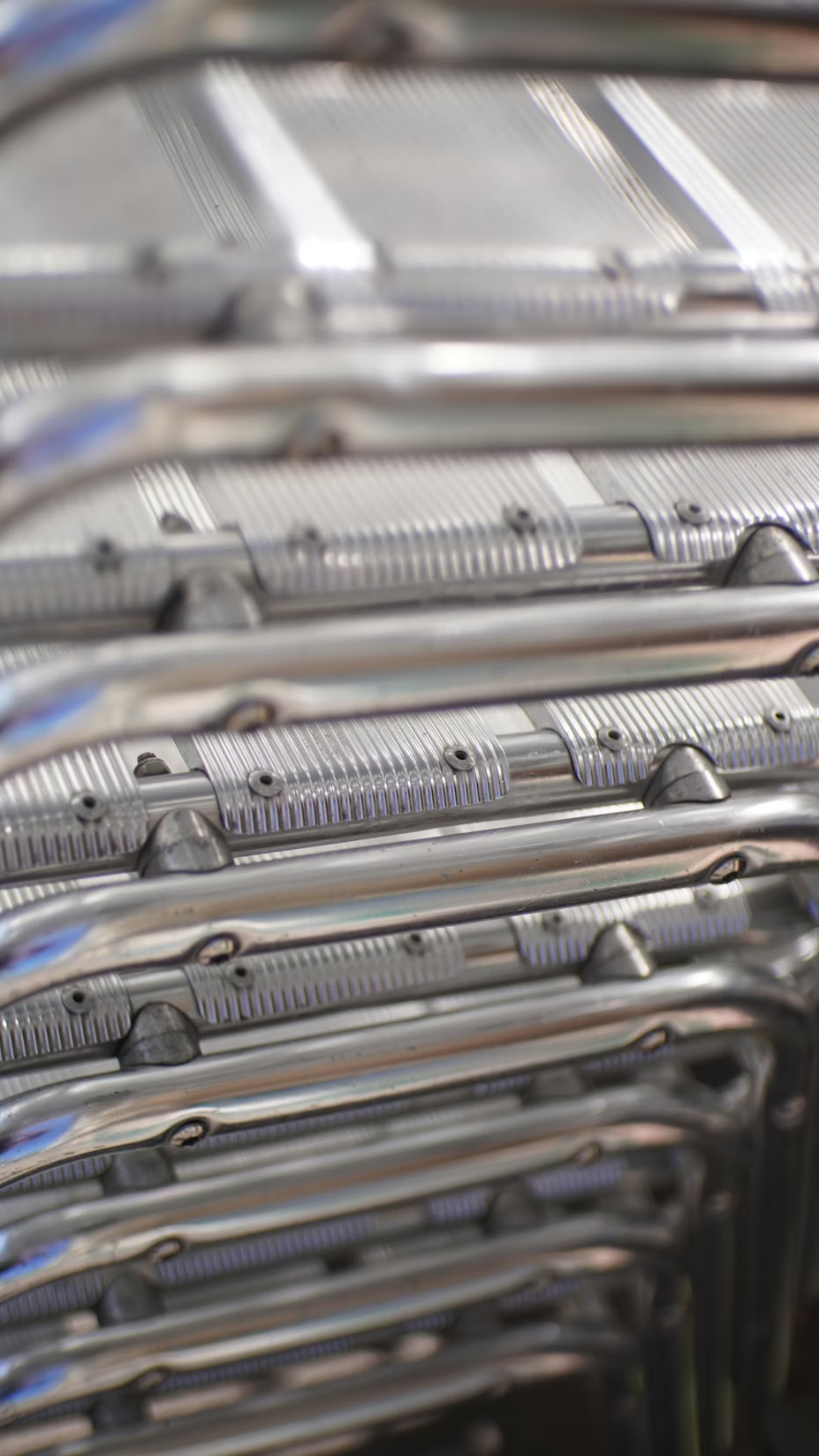
Engineering Approach
Designed around the actual duty — not the nearest standard frame size.
Nuclear plant support-system heat exchangers often involve fluid services, fouling considerations, and temperature and pressure profiles that make standard catalog heat exchangers a poor or risky fit. Service water quality, component cooling water chemistry, and lube-oil contamination scenarios all affect tube material selection, tube-side/shell-side assignment, and maintenance access geometry.
MRX engineers each exchanger around the actual operating duty — thermal performance, material compatibility, connection geometry, code compliance, and maintenance access — and fabricates entirely in-house. See our heat exchanger capabilities overview.
Skid-Mounted Process Modules
Chemical Addition, Sampling, Demin Water & Process Skid Modules
Delivered as assembled, tested, and documented packages — reducing field labor, simplifying commissioning, and providing a clean scope boundary for plant integration.
Chemical Addition Skids
Corrosion inhibitor, biocide, scale control, and pH adjustment systems for cooling and service water loops. Engineered as complete, tested, documented modules.
Sampling Skids
Process sample conditioning systems for chemistry monitoring, radiological sampling, and process parameter verification. Configured for the actual sample point and analytical requirements.
Demineralized Water Skids
Polishing, storage, and distribution support for high-purity water systems serving secondary-side and support processes. Can include packaged tankage, UV treatment, and transfer pump provisions.
Pump & Transfer Skids
Chemical transfer, process fluid circulation, and auxiliary pump packages. Engineered around actual flow, head, and fluid requirements — not adapted from catalog.
Module Delivery Advantage
A tested and documented skid module is a cleaner procurement and installation scope than an equivalent loose-component order. MRX designs, builds, tests, and documents each module as a complete deliverable.
Non-Class Piping
Piping Spools, Supports & Structural Steel for Non-Class 1, 2 & 3 Systems
The support systems, secondary-side piping, and balance-of-plant piping runs in a nuclear or advanced-energy facility represent a substantial fabrication scope that is not governed by nuclear Class 1, 2, or 3 piping codes — but is still expected to meet the documentation, traceability, and quality standards appropriate for the operating environment.
MRX fabricates piping spools, support assemblies, and structural steel for non-Class systems under ASME B31.1 and B31.3 as applicable. All weld documentation, material traceability, NDE, and as-built records are organized to meet the documentation expectations of nuclear-adjacent procurement.
See also: Process Piping Fabrication Best Practices for Regulated Industries.
Scope Coverage
What MRX Fabricates for Non-Class Piping Scopes
Piping spools
Carbon steel, stainless steel, and alloy piping spools fabricated to isometric drawings under ASME B31.1 or B31.3.
Pipe supports and hangers
Structural support assemblies, spring hangers, clamps, and guide structures designed and fabricated to specification.
Structural steel
Equipment platforms, pipe racks, framing, and structural supports for balance-of-plant systems.
Specialty and custom piping assemblies
Complex multi-branch assemblies, high-alloy spools, and custom fabrications that standard pipe shops do not accommodate well.
Carbon & Stainless Tankage
Diesel Day Tanks, Condensate Storage, RWST-Equivalent & Non-Safety-Related Tankage
Plant service tanks — even on the non-safety-related side — require fabrication quality, material documentation, and construction precision consistent with the nuclear operating environment.
Diesel generator day tanks
Carbon steel day tanks for emergency diesel generator fuel service. Fabricated to UL 142, ASME, or owner specification as required.
Condensate storage tanks
Stainless steel condensate storage tanks for secondary-side chemistry management. Can include internal coatings, agitation, and instrumentation provisions.
RWST-equivalent non-safety tankage
Large-volume tanks used in support of reactor water storage and similar functions on the non-safety-related side. Designed for plant integration geometry and documentation requirements.
Chemical storage tanks
Carbon and stainless tanks for boric acid, sodium hypochlorite, hydrazine, and other plant chemical services. Material selection and lining per fluid compatibility.
Demineralized water storage
High-purity stainless tanks for demineralized water storage and distribution. Passivated, electropolished, or internally finished per system purity requirements.
Waste and process storage tanks
Interim-storage and process tanks for plant support systems. Engineered around actual geometry, nozzle, and interface requirements.
Documentation Standard
All MRX tankage for nuclear-adjacent scopes is fabricated with complete material mill-cert traceability, weld documentation, NDE records, and an organized as-built package — regardless of whether the tank sits under a nuclear code or a commercial industrial standard. The operating environment demands it, and MRX's documentation discipline delivers it.
Decommissioning Fabrication
Waste Containers, Spent Resin Liners & Contaminated Equipment Enclosures
Decommissioning projects generate custom fabrication scopes that are rarely catalog-solvable. MRX engineers and fabricates bespoke solutions from conceptual geometry through complete documentation.
Waste Containers
Custom-fabricated waste containers to defined geometric and structural specifications for low-level radioactive waste handling, transport, and interim storage.
Spent Resin Liners
Liners and containment structures for spent ion-exchange resin from water treatment systems. Engineered to fit existing handling and storage configurations.
Contaminated Tooling Enclosures
Custom enclosures for contaminated tooling, components, and equipment requiring controlled storage or transport during decommissioning operations.
Custom Decommissioning Structures
One-off engineered fabrications for decommissioning projects where standard hardware does not exist. MRX can develop geometry from conceptual requirements through fabrication and documentation.
Custom geometric fit
Decommissioning containers and enclosures are often designed around existing hardware, openings, and handling equipment. MRX can develop fabrication geometry from conceptual inputs.
Unusual material requirements
Contaminated or radioactive service may require specific material selection, surface treatment, or shielding provisions. MRX engineers these requirements into the design from the start.
Complete documentation
Material traceability, weld records, dimensional inspection, and as-built documentation are delivered with every decommissioning fabrication — supporting regulatory and waste-management requirements.
Hot Cell & Glovebox Fabrication
Hot Cell Ancillaries, Glovebox Structures & Custom Support Fabrications
Research, processing, and industrial nuclear environments require custom-engineered fabrications that standard fabricators are not equipped to support.
Hot Cell Ancillary Fabrication
Custom fixtures, penetration covers, transfer port components, tool hangers, and related ancillary structures for hot cell environments. Fabricated to dimensional drawings with full material documentation.
Glovebox Structures
Structural glovebox frames, secondary containment, and integrated support structures for laboratory and industrial applications. Engineered for dimensional precision and material compatibility with the intended environment.
Custom Enclosures and Containment
Shielded enclosures, ventilated containment boxes, transfer containers, and related custom structures requiring careful geometric control and documentation.
Support Fabrications
Equipment supports, mounting structures, modular platforms, and related custom fabrications for research and industrial nuclear-adjacent environments.
Why Custom Engineering Matters Here
Hot cell and glovebox fabrication is not a catalog problem.
Hot cell ancillaries and glovebox structures exist at the intersection of precise dimensional requirements, unusual material specifications, contamination-control needs, and operating environments that standard fabricators never encounter. MRX's in-house engineering capability means we engage from the design stage — developing geometry, selecting materials, and producing documentation that supports your procurement and regulatory process.
RFQ Preparation
What Buyers Should Clarify Before Releasing a Balance-of-Plant RFQ
Leaving these inputs open does not defer the risk — it shifts it into procurement, fabrication, and review, where it costs more to resolve.
Code and Regulatory Basis
- Which ASME code and edition govern the vessel or system
- Whether the component is nuclear-class or non-nuclear-class
- What QA program applies (commercial, owner-specified, or other)
- Whether any special purchaser requirements or owner specs apply
Operating Conditions
- Design pressure and temperature — min and max
- Normal and peak operating conditions
- Fluid service — process fluid, concentration, corrosivity
- Whether cyclic service, thermal transients, or fatigue conditions apply
Documentation Expectations
- Material traceability and mill-cert requirements
- What records must travel with the component
- NDE methods, extent, and acceptance criteria required
- Hydrostatic or pneumatic test requirements and witnessing expectations
Scope and Delivery
- Vessel only, vessel with nozzles, or complete module
- Whether design responsibility sits with MRX or buyer
- Site integration and connection requirements
- Shipping, rigging, and installation constraints
Related Resource
For nuclear-specific procurement guidance including code path, Section III vs. Section VIII distinctions, and QA alignment, see the Nuclear RFQ Guide.
Fabrication Discipline & Documentation
Why fabrication discipline and documentation matter even for non-Class, secondary-side, and support scopes.
In a nuclear or advanced-energy plant, a quality failure in a balance-of-plant component is not a benign event. Service water system failures affect cooling for safety-related equipment. Chemical addition system leaks create chemistry excursions. Diesel fuel system failures compromise backup power. Even on the non-Class, non-safety-related side, the consequences of fabrication quality problems are disproportionate to the position of the component in the plant hierarchy.
Plant operators and EPC contractors sourcing balance-of-plant fabrication understand this. They typically require documentation packages, material traceability, NDE records, and inspection discipline that would be unusual for comparable industrial components in non-nuclear contexts. The standard is higher because the environment demands it.
MRX's documentation and quality practices are built around this standard. Our traveler systems track material heat numbers from mill cert through final inspection. Weld documentation includes welder qualification records, WPS/PQR traceability, and NDE results organized by joint. Hydrostatic test records, PWHT records, and dimensional inspection reports are included in the as-built package as standard — not as special requests.
Mill-cert and heat-number traceability
Every pressure-containing material is tracked from procurement through final inspection — heat number, mill cert, and NDE record all linked to the vessel traveler.
Weld and NDE documentation
Welder qualification records, WPS/PQR traceability, NDE method and acceptance criteria, and results are documented and included in the as-built package.
NCR identification and resolution
Non-conformances are identified, documented, and resolved through a defined process — not informally managed and forgotten. Disposition records are part of the package.
Organized as-built packages
All project records are organized into a complete as-built documentation package that travels with the component and supports plant integration, commissioning, and records retention.
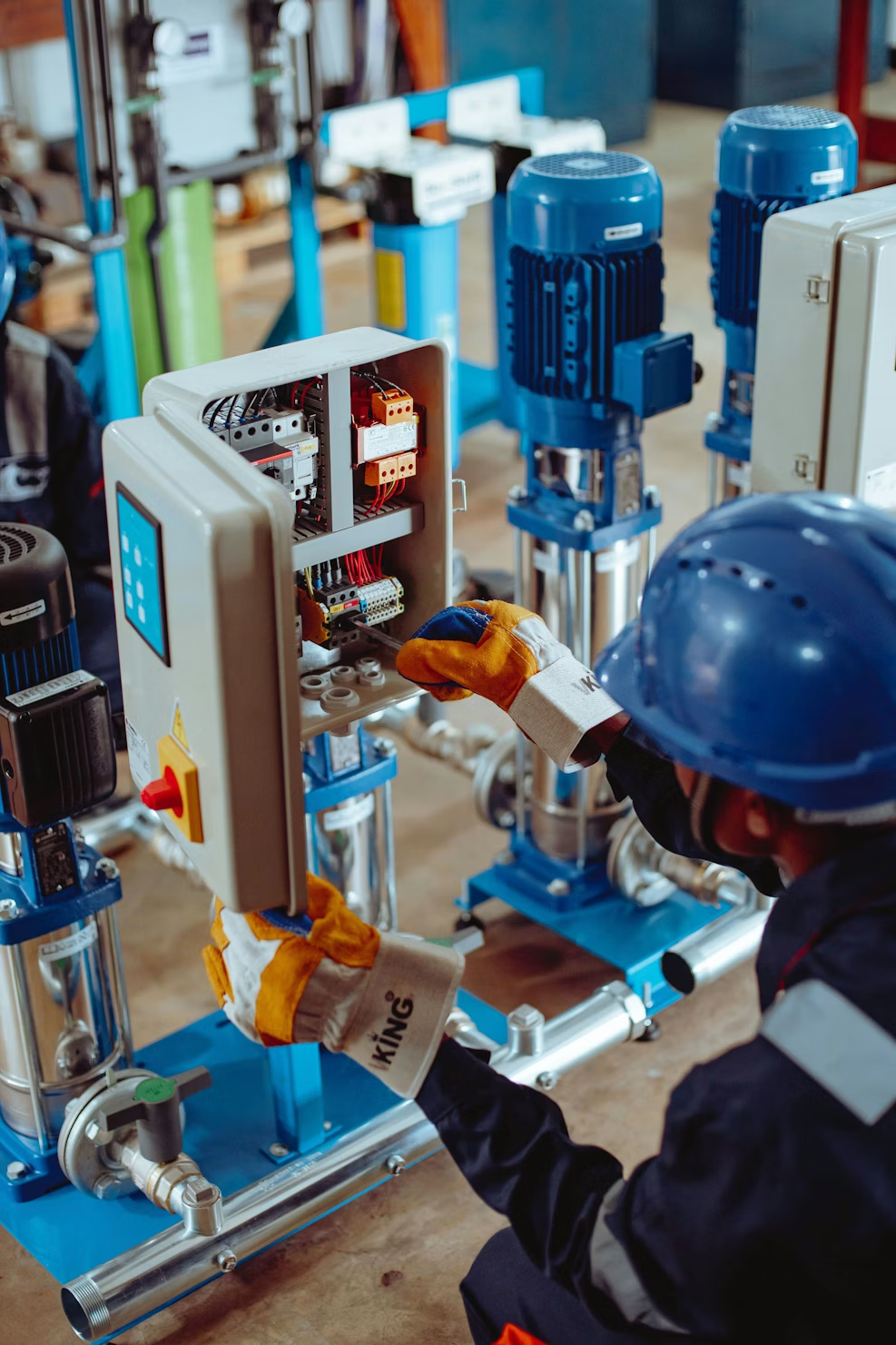
Why Custom Engineering Matters
Balance-of-plant scopes are almost never a catalog problem. The operating conditions, geometry, and documentation requirements combine in ways that standard products cannot solve cleanly.
Nuclear and advanced-energy plant projects generate fabrication requirements that are individually unremarkable — vessels, exchangers, tanks, piping, skids — but combine in ways that make standard catalog approaches poor fits. Plant geometries drive unusual nozzle orientations. Process conditions require material choices outside standard catalog alloys. Documentation requirements mean that off-the-shelf items must often be re-documented from scratch to meet plant records standards.
Custom engineering does not mean expensive or slow. It means the fabrication is designed around the actual requirements — plant geometry, operating profile, material compatibility, code compliance, and documentation needs — rather than asking the plant to adapt to the nearest available standard product.
For demanding balance-of-plant scopes, the quality of the engineering relationship upstream of fabrication is often as important as the capability of the shop floor. MRX provides both — in-house engineering that engages early and stays engaged through delivery.
RFQ Specification Parameters
What a Complete Specification Package Should Define
A clear specification saves time, prevents procurement misalignment, and produces better fabrication outcomes.
| Parameter | What to Define |
|---|---|
| Design code and edition | ASME Section VIII Div 1 or Div 2, B31.1, B31.3, or owner specification — state explicitly |
| Nuclear-class designation | Whether component is nuclear-class (Section III) or non-class / industrial ASME |
| Design pressure and temperature | MAWP, MDMT, design temperature range |
| Operating conditions | Normal, peak, and transient operating profile |
| Fluid service | Process fluid identity, concentration, pH, temperature, corrosivity, and erosion potential |
| Material specification | Required material grade and specification — SA/SB, CS, SS, alloy, other |
| Cyclic service | Whether fatigue analysis or cyclic-service designation applies |
| NDE requirements | Methods, extent, acceptance criteria, and code edition basis |
| PWHT requirements | Whether required by code or owner specification |
| Traceability level | Heat-number tracking, weld documentation, and mill-cert requirements |
| Inspection hold/witness points | Which hold and witness points apply and who must be present |
| Documentation package | MTRs, NDE reports, calculations, hydro-test records, as-builts, traveler |
| Scope boundary | Vessel only, nozzles, internals, skid-mounted module, or full system scope |
| Design responsibility | Buyer-supplied drawings or supplier-designed per specification |
| Delivery requirements | Packaging, shipping constraints, rigging provisions, and installation environment |
How MRX Approaches This Work
A disciplined fabrication partner for the full scope of nuclear-adjacent and balance-of-plant work.
MRX does not approach nuclear-adjacent and balance-of-plant work as a secondary market or an extension of our standard product lines. We approach it as a specific fabrication discipline that demands engineering depth, documentation maturity, quality discipline, and transparent communication about what we can and cannot do.
Our stamp authority covers ASME Section VIII Division 1 and 2 pressure vessels. Our piping capability covers ASME B31.1 and B31.3. We do not hold ASME Section III / N-stamp nuclear component certification — and we say that clearly, so that buyers can align scope appropriately without discovering a mismatch late in the procurement process.
For the full range of non-Class, secondary-side, balance-of-plant, decommissioning, and hot-cell-adjacent fabrication, MRX provides the engineering depth, fabrication capability, and documentation discipline that the environment demands — built and delivered entirely in-house in Canby, Oregon.
Related MRX Resources & Capabilities
Further reading for nuclear-adjacent and energy project teams
ASME-coded pressure vessels for demanding process and energy applications.
Custom shell-and-tube and specialty heat exchangers engineered to the actual operating duty.
ASME B31.1, B31.3, and BPE process piping for regulated industrial and energy environments.
Code path, QA expectations, and procurement alignment for nuclear-adjacent vessel projects.
How 2025 code changes affect pressure vessel and thermal system projects in 2026.
Harsh-environment thermal and pressure systems for mission-critical applications.
Nuclear Energy & Advanced Reactor Cluster
More in This Cluster
RFQ Guide
Nuclear & Advanced Reactor Pressure Vessel RFQ Guide
Technical Guide
Rugged Thermal & Pressure Systems for Defense Applications
Best Practices
Process Piping Fabrication for Regulated Industries
Buyer's Guide
Pressure Vessel, Tank & Reactor Buyer's Guide
Code Guide
2026 ASME BPVC Key Changes for Pressure Vessels
Product Hub
Pressure Vessels, Tanks & Reactors — Product Overview
Have a Nuclear-Adjacent or
Balance-of-Plant Fabrication Scope?
Talk with MRX about your vessel, exchanger, module, piping, tankage, decommissioning, or hot-cell fabrication requirements. We can help you define scope, clarify code and documentation needs, and deliver a complete, documented fabrication outcome.
Nuclear-Adjacent Balance-of-Plant Fabrication — FAQ
Practical answers to the questions buyers and project teams most commonly ask about BOP and nuclear-adjacent fabrication scopes.